

Samsung’s latest flagship cycle arrives at a pivotal moment for the smartphone industry. Hardware improvements are becoming incremental, artificial intelligence is rapidly redefining user expectations, and component costs are quietly reshaping pricing strategies across the premium segment. Against this backdrop, the Galaxy S26 series launches not simply as an annual refresh, but as a calculated response to shifting market forces.
Unveiled at Samsung’s February Unpacked event, the Galaxy S26 lineup — including the S26, S26+, and S26 Ultra — introduces deeper AI integration, a new privacy-focused display feature, and adjusted pricing in several markets. The changes signal a broader repositioning of what a flagship device represents in 2026.
Pricing Adjustments Reflect Component Pressures
Samsung confirmed price increases for select Galaxy S26 models, citing rising memory and chipset costs driven partly by global demand for AI-capable hardware. According to Reuters, the company raised prices in key markets as supply chain pressures and DRAM costs continue to affect manufacturers across the industry (Reuters report).
While the Ultra variant remains closer to last year’s pricing tier, the standard and Plus models reflect an upward shift that could test consumer elasticity in the premium Android segment. The move aligns Samsung with a broader industry trend: higher AI capability increasingly means higher baseline costs.
AI Moves From Feature to Infrastructure
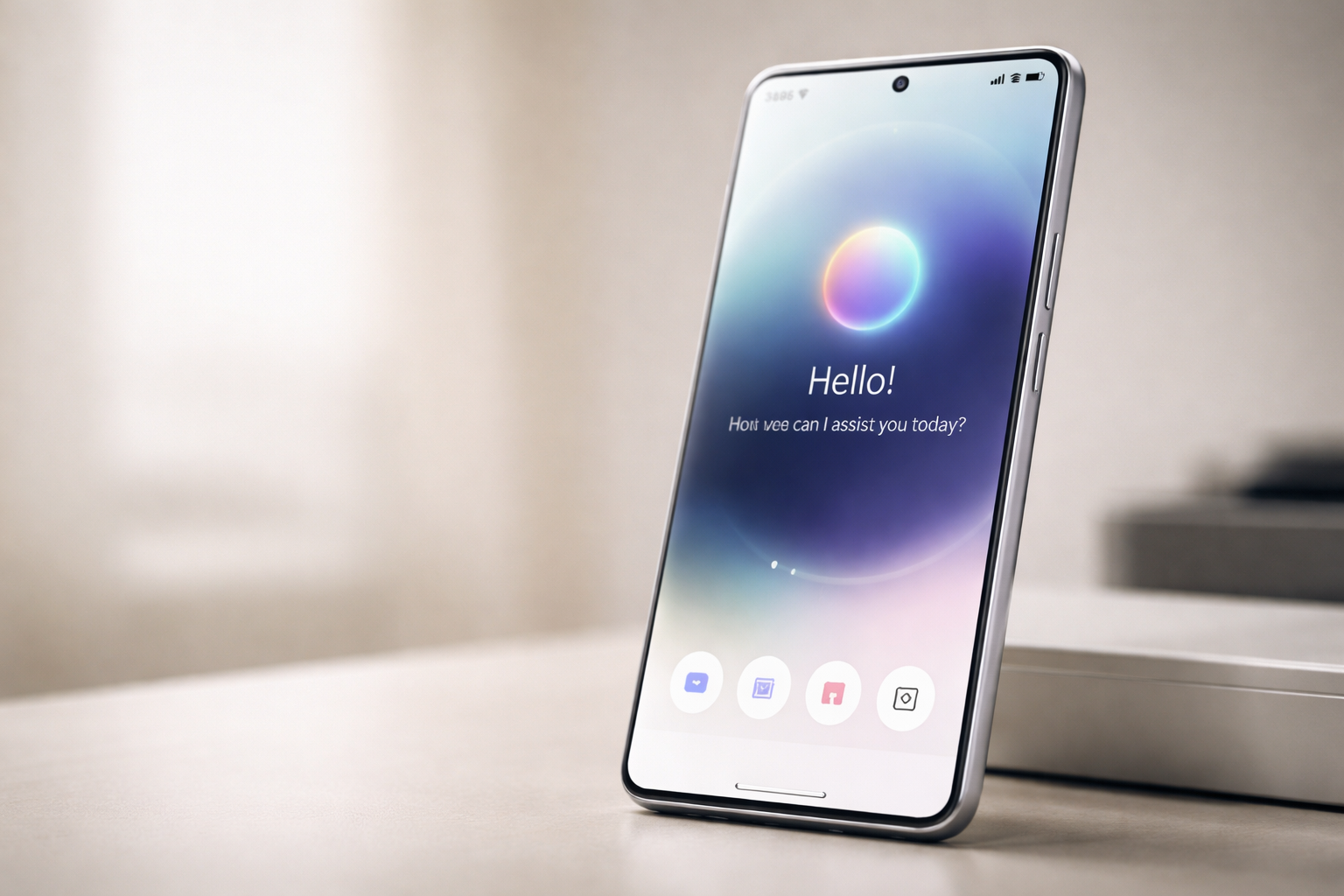
The Galaxy S26 series expands Samsung’s Galaxy AI framework beyond isolated tools into system-wide functionality. Integrated assistants now include support for Google Gemini and Perplexity, working alongside Samsung’s native services to deliver contextual automation and proactive suggestions.
Samsung describes the S26 as its “most intuitive Galaxy AI phone yet,” emphasizing adaptive learning, cross-app task execution, and deeper on-device intelligence (official Samsung announcement).
This shift matters because AI is no longer positioned as a standalone feature. Instead, it functions as a background layer shaping how users search, compose messages, manage schedules, and interact with apps. The device becomes less reactive and more anticipatory — a subtle but meaningful evolution in smartphone UX.
A Hardware Approach to Privacy
One of the most distinctive additions is Samsung’s new Privacy Display mode, designed to limit screen visibility from side angles without relying on external screen protectors. The feature, embedded at the hardware level, aims to reduce “shoulder surfing” risks in public environments.
Unlike software-based privacy filters, this approach integrates directly into the panel’s display characteristics. Samsung positions it as a practical security enhancement for business users and frequent travelers, reinforcing the company’s effort to differentiate through tangible privacy improvements rather than purely software claims.
Market Implications
The Galaxy S26 launch unfolds amid intensifying competition in the high-end smartphone market. Premium buyers are increasingly weighing ecosystem integration, AI capabilities, and long-term software support over incremental camera or processor gains.
Price sensitivity remains a critical variable. With competitors preparing their own AI-driven releases and alternative Android brands maintaining aggressive pricing strategies, Samsung’s ability to justify higher entry points will depend heavily on whether consumers perceive its AI ecosystem as genuinely useful rather than experimental.
At the same time, discounted pricing on previous-generation Galaxy S25 devices suggests a dual-track strategy: defend the premium tier while expanding volume through prior models. This approach helps maintain market share without undermining flagship positioning.
Strategic Positioning in 2026
The Galaxy S26 does not redefine smartphone hardware in dramatic fashion. Instead, it recalibrates priorities. Artificial intelligence becomes foundational rather than optional. Privacy shifts closer to hardware engineering. Pricing reflects structural shifts in component demand rather than marketing ambition.
For Samsung, the objective appears clear: establish the Galaxy S26 as the benchmark Android flagship in an AI-first era. Whether the market fully embraces that positioning will become evident in the months ahead, but the strategic intent is unmistakable.
In a maturing smartphone industry, differentiation increasingly comes from integration, ecosystem coherence, and trust. The Galaxy S26 is Samsung’s attempt to compete on all three fronts simultaneously.