

The 2026 flagship cycle has made one thing clear: the smartphone battleground is no longer defined primarily by camera megapixels or display brightness. Artificial intelligence now sits at the center of competitive positioning. With the Pixel 10 and the Galaxy S26, Google and Samsung are presenting two distinct interpretations of what an AI-first smartphone should be.
Both devices integrate advanced on-device intelligence, multimodal assistants, and automation frameworks. Yet their strategic approaches diverge in meaningful ways — from ecosystem control to execution philosophy.
Google’s AI-First Architecture
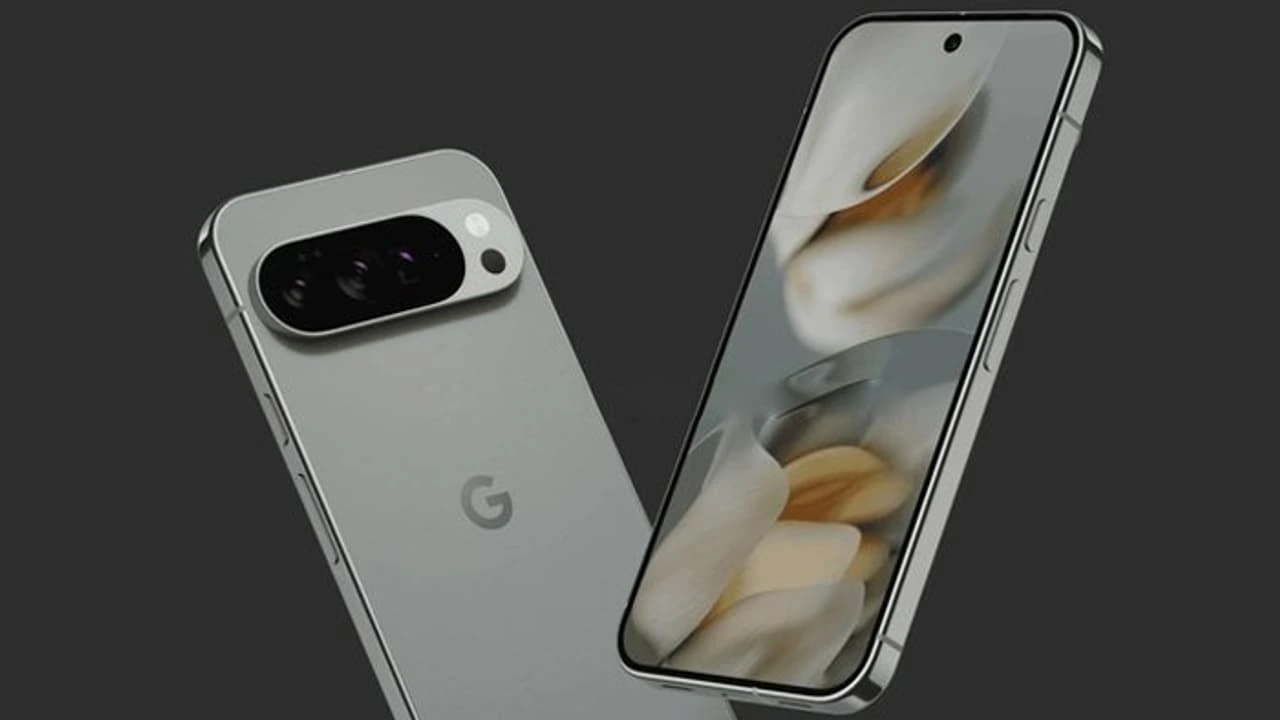
The Pixel 10 builds upon Google’s long-term effort to make Android itself an AI-native platform. Gemini is not layered on top of the experience; it is embedded within it. Google’s recent updates position Gemini as a system-level orchestrator capable of executing multi-step workflows across apps (Google official update).
The philosophy is centralized intelligence. The device becomes an execution layer for Google’s broader AI ecosystem — Search, Gmail, Maps, Calendar — all connected through a unified assistant framework.
- Deep OS-level integration
- Strong cloud + on-device hybrid model
- Rapid feature rollout via Google services updates
- Tight alignment with Google’s AI research roadmap
Google’s advantage lies in vertical AI control. Because it owns Android and Gemini, it can iterate system-wide AI features faster than most hardware partners.
Samsung’s Multi-Layer AI Strategy
Samsung’s Galaxy S26 takes a more layered approach. Rather than centering everything on a single AI framework, Samsung integrates multiple AI systems — including Google Gemini and other contextual engines — within its Galaxy AI environment.
At its Unpacked launch event, Samsung emphasized contextual automation, personalization, and hardware-assisted privacy enhancements (Samsung official announcement).
The strategy is ecosystem expansion rather than centralization. Galaxy AI functions as a bridge between Samsung’s proprietary features and Google’s AI infrastructure.
- Hardware-level AI acceleration
- Privacy-focused display technologies
- Broader customization layers via One UI
- AI features embedded across camera, productivity, and system tools
Samsung’s strength is hardware integration. It controls display innovation, memory configurations, and thermal optimization — allowing AI workloads to run consistently without over-reliance on cloud latency.
On-Device Intelligence vs Cloud Coordination
Both devices rely on hybrid AI models, but their emphasis differs. Pixel leans heavily on cloud-augmented intelligence, leveraging Google’s server-scale infrastructure for heavy computational tasks. Galaxy S26, by contrast, pushes more visible emphasis on on-device execution to preserve responsiveness and privacy.
The difference is philosophical as much as technical. Google optimizes for ecosystem coherence; Samsung optimizes for device autonomy.
Pricing and Market Position
Pricing pressures tied to AI hardware are shaping both strategies. Rising memory and chipset costs have influenced flagship pricing adjustments across the industry, as previously reported by Reuters (Reuters industry analysis).
Pixel traditionally competes aggressively on price-to-performance value within the premium tier. Samsung, meanwhile, positions Galaxy Ultra models as aspirational devices that combine hardware refinement with AI capability.
As AI becomes foundational, consumers may increasingly evaluate devices not by raw benchmarks but by how intelligently they execute daily tasks.
User Experience: Automation vs Customization
The Pixel 10 aims to minimize friction by centralizing task automation. Its goal is seamless execution — fewer manual inputs, more predictive behavior.
The Galaxy S26, on the other hand, balances automation with user configurability. One UI remains deeply customizable, offering layered control over how AI features surface and behave.
For some users, simplicity will win. For others, granular control will remain essential.
Strategic Implications for 2026
This comparison reflects a broader industry divergence. AI is no longer an add-on; it defines device identity. The Pixel 10 represents a platform-driven AI model anchored in Google’s ecosystem. The Galaxy S26 represents a hardware-driven AI model that integrates multiple intelligence layers.
Neither approach is inherently superior. The outcome depends on reliability, transparency, and real-world usefulness.
As smartphones evolve into semi-autonomous systems, the competition between Google and Samsung may hinge less on component specifications and more on execution philosophy. The AI era is not about who builds the smartest chip — it is about who builds the most coherent intelligent experience.